
Connect with Us
The Current

Our Insights

May 3, 2026

Big Tech is Bulking for The AI Arms Race

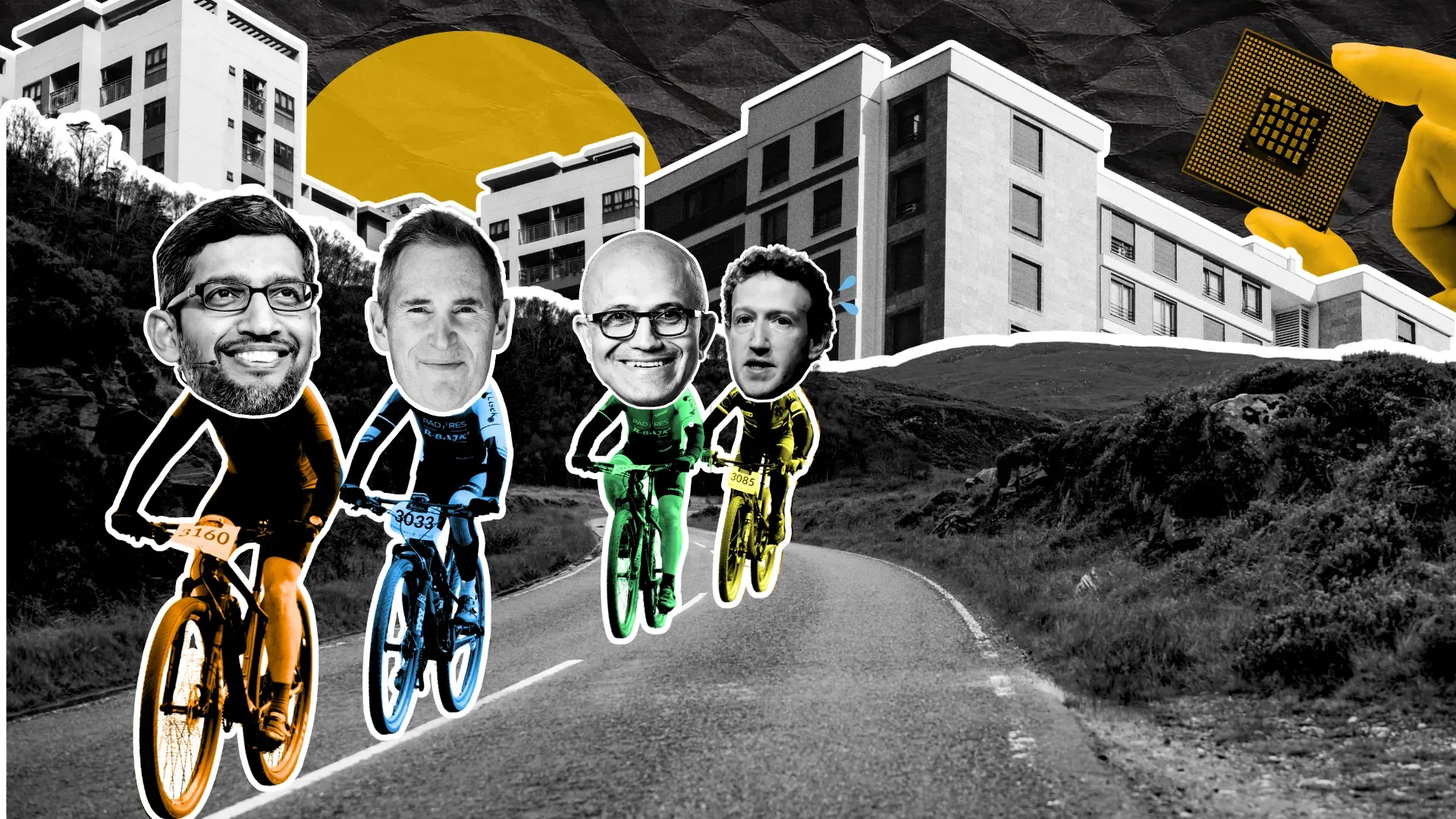
The four largest players in cloud and AI infrastructure reported first-quarter results this week, and each arrived at the same conclusion: current spending levels are not enough. Microsoft, Alphabet

STORY OF THE WEEK

Big Tech is Bulking for The AI Arms Race

*The latest earnings made one thing clear: big tech’s infrastructure spending is accelerating, not plateauing.*

Big Tech is Bulking for The AI Arms Race

The four largest players in cloud and AI infrastructure reported first-quarter results this week, and each arrived at the same conclusion: current spending levels are not enough. Microsoft, Alphabet, Meta, and Amazon collectively outlined capital expenditure plans that surpassed analyst expectations across the board, with executives citing surging demand signals, rising component costs, and a once-in-a-generation platform shift as justification for the escalation.

The buildout is being driven by a mix of raw demand and competitive pressure. Microsoft flagged that it expects to remain capacity-constrained through at least the end of 2026 even as it accelerates deployment. Alphabet's cloud backlog nearly doubled quarter-on-quarter, suggesting committed future revenue is piling up faster than infrastructure can support it. Amazon, meanwhile, pointed to existing customer commitments as de-risking a substantial portion of its planned spend.

  • Microsoft (MSFT) plans roughly $190B in 2026 capex, topping prior analyst forecasts near $150B; AI annual recurring revenue now exceeds $37B, up triple digits

  • Alphabet (GOOGL) raised 2026 capex guidance to $180B-$190B and flagged a further increase in 2027; Google Cloud crossed $20B in quarterly revenue for the first time

  • Meta (META) lifted its 2026 capex range to $125B-$145B on higher memory pricing and additional data center costs

  • Amazon's (AMZN) first-quarter capex rose sharply year-over-year to $43.2B, with the company on track to deploy $200B in full-year capital spending

Nvidia (NVDA) remains central to all four companies' infrastructure strategies, even as each moves to diversify with proprietary silicon. The message from this earnings season is that the AI infrastructure super-cycle is still in its early stages.

CLIMBS OF THE WEEK

What's Up in the Markets

What's Up in the Markets

INTC (+20.7%): Investors are flooding to Intel stock in hopes Intel can bring chip fabrication onshore.

GOOGL (+12.0%): Google’s cloud business blew past expectations, propelling the giant higher this week.

RDDT (+7.5%): The social platform’s authenticity in the AI age helped the company surpass quarterly expectations.

SLIDES OF THE WEEK

What's Down in the Markets

What's Down in the Markets

SPOT (-14.7%): A weak subscriber outlook overshadowed an otherwise healthy narrative from the company.

HOOD (-13.0%): Robinhood’s crypto earnings spooked investors, missing expectations as crypto hype dies down.

SOFI (-10.9%): Despite strong results, investors in the company expected the future bar to be raised.

CHART OF THE WEEK

S&P 500 Headcount Contracts for the First Time in Nearly a Decade

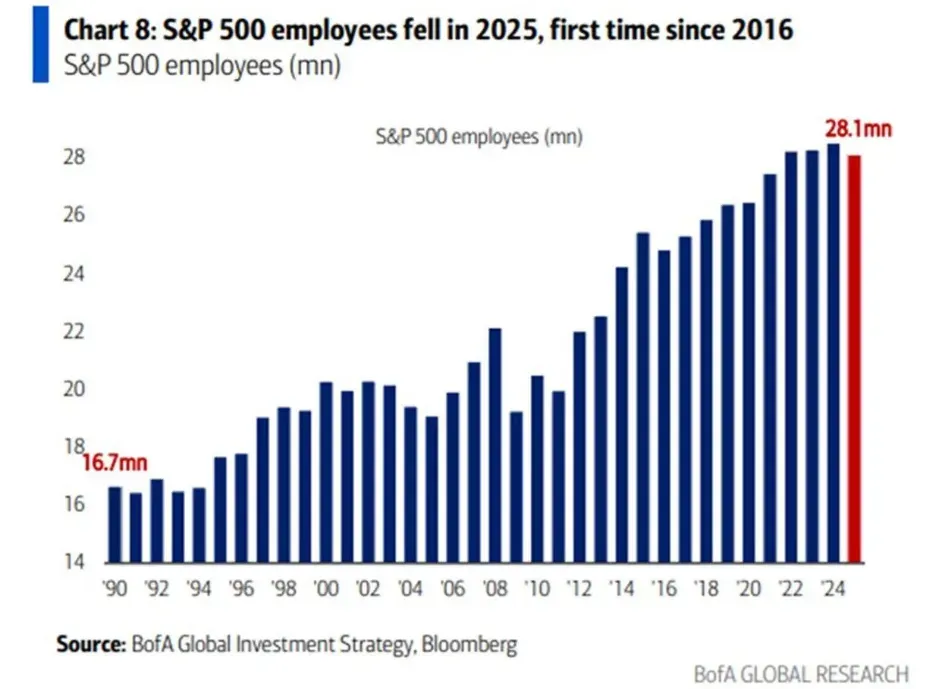
Total employment across S&P 500 companies fell in 2025 to 28.1 million workers, marking the first

S&P 500 Headcount Contracts for the First Time in Nearly a Decade

Total employment across S&P 500 companies fell in 2025 to 28.1 million workers, marking the first year-over-year decline since 2016. The drop is modest in absolute terms but symbolically significant, interrupting a long structural trend of corporate workforce expansion that has characterized the post-financial-crisis era. From a trough near 16.7 million employees in the early 1990s, S&P 500 headcount nearly doubled over three-and-a-half decades.

The reversal likely reflects a confluence of factors: aggressive cost-cutting following the post-pandemic hiring surge, accelerating automation and AI adoption across white-collar functions, and margin pressure prompting leaner operating structures. The prior contraction in 2016 coincided with an energy sector downturn and broad efficiency initiatives. Whether 2025 marks an isolated correction or the beginning of a more sustained headcount reduction cycle will be a key labor market question heading into 2026.

The Current